

Ordinary fascism.
Things are worse than ever, and feel as normal as they ever did.

“Show me what democracy looks like! This is what democracy looks like!”
It’s kind of an overused chant at this point, but I confess it still tugs at my heart strings. The feeling of coming together, of pushing back, of making demands not as political elites or corporate bigwigs but as ordinary, everyday people—that, the chant reminds us, is the substance of real democracy. (I’ve covered this topic in a piece for the Institute for Anarchist Studies, “Democracy: Beyond the State.”)
If collective resistance is part of what democracy looks like, what does non-democracy look like? Show me, then, what fascism looks like.
We all have an image in our heads: a dystopian montage of jackbooted thugs knocking down civilian doors, the military in the streets, an invincible leader ruling by edict.
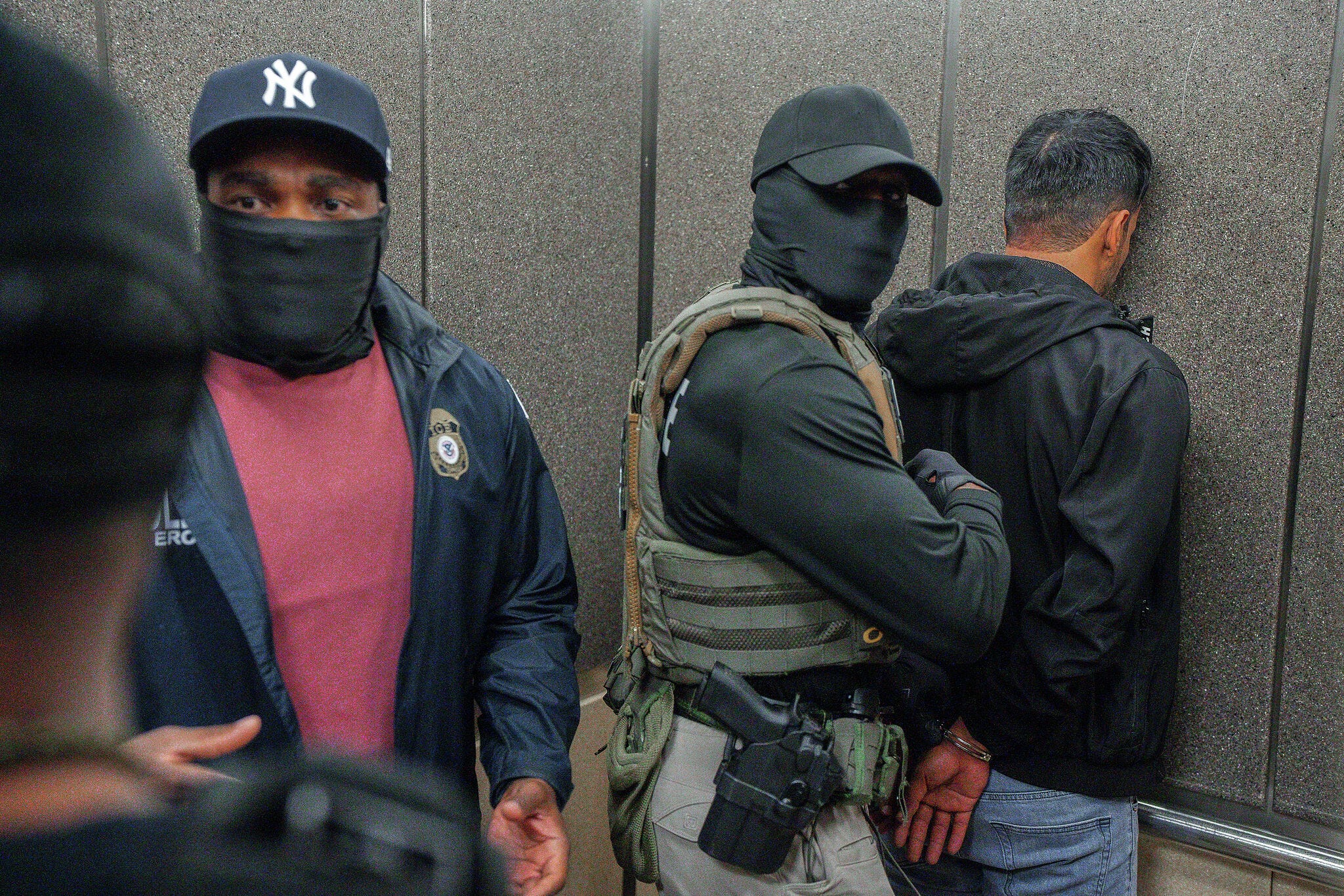
All of these things are, by the way, currently happening. They’re sending military helicopters to raid residential apartment buildings. People are getting arrested by and being literally disappeared. The military is slaughtering civilians in the Caribbean. ICE is AI generating knockoff Fourth Reich recruitment posters.

So why does everything feel so normal?
We go to school or go to work and see our friends on our days off. We maintain the same pastimes and go to the same bars and watch the same TV shows. Unless you’re in a community directly targeted by the administration, your day-to-day life is largely unchanged. And while you go to the same job, wait for the same bus, and message your same friends, you have 24/7 access to images of a domestic paramilitary terror campaign as the President rules by decree without functional opposition.
So which is it? Because both of these things can’t be true. Either life in America is going on as usual or not. For many of us, our heads tell us that the US is undergoing a profound, objectively authoritarian transformation. All the while, our hearts are preoccupied with the regular minutiae of everyday life, which continues on as it always has.
It’s a recipe for cognitive dissonance and psycho-political turmoil. If everyday life is still chugging along, that either means:
It isn’t really authoritarianism, or
Authoritarianism doesn’t actually make daily life worse.
If the former, we’ve accepted all of the novel brutality of the second Trump administration as within the Overton window of normal American politics. This, to me, seems bad.
If the latter, it begs the question of if authoritarianism is all that bad. If life goes on as usual, what’s all the fuss about, anyway? Shouldn’t we focus on the bread-and-butter issues that actually affect our quality of life? If authoritarian nationalism isn’t inherently bad, maybe it even has some redeeming qualities. And this line of thought, to me, seems even worse.
Today, we’re exploring a third option to answer the question: how can it be fascism if everything feels so normal?
American Fascism’s Long Arc
To grapple with this paradox, we should take a step back. Trump’s blatant authoritarianism and proudly xenophobic paramilitary attacks are, indeed, new. Things are actually worse than they have been in living memory in real, tangible ways. But looking at the broad arc of American history, this is far from the first time the federal government has unleashed authoritarian violence against its victims.
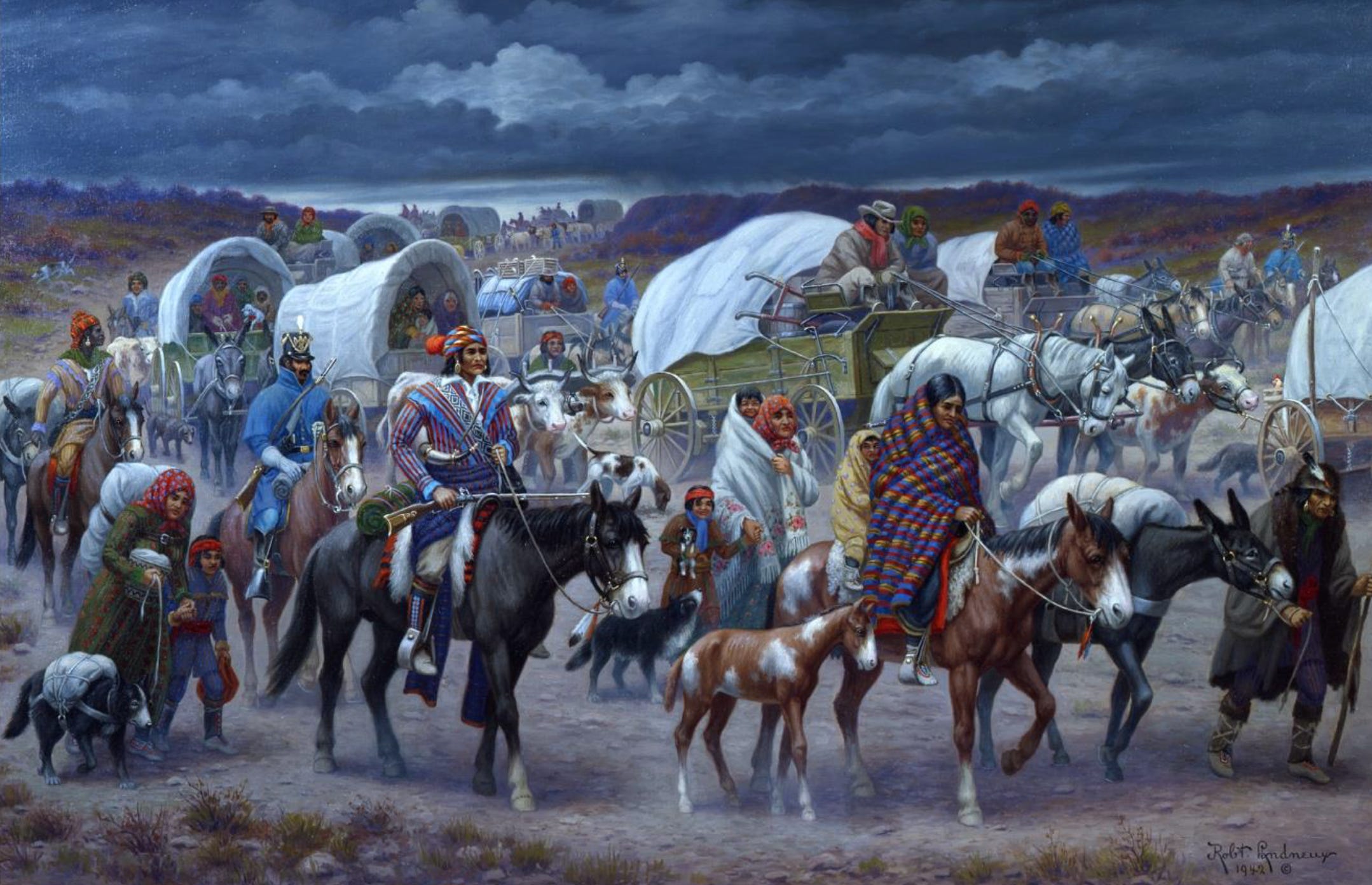
As thinkers from the Black radical tradition have long pointed out, we don’t need to make analogies to European Nazism to explain American fascism because the American government has long acted in an explicitly fascistic way against Black and Indigenous populations. The United States was a liberal democracy during the Trail of Tears and chattel slavery, throughout Jim Crow and the killing fields of Vietnam, in that there were regular, competitive multi-party elections. But the violence the American state was just as one-sided and systematically brutal as the historic crimes of European fascism.
As Langston Hughes declared in 1937:
We Negroes in America do not have to be told what fascism is in action. We know. Its theories of Nordic supremacy and economic suppression have long been realities to us.
A generation later, the martyr George Jackson famously wrote:
Settle your quarrels, come together, understand the reality of our situation, understand that fascism is already here, that people are already dying who could be saved, that generations more will live poor butchered half-lives if you fail to act.
Note that Jackson did not say fascism will be coming in a few decades when the host of The Apprentice gets access to the nuclear codes. His analysis was that fascism was already here in the early 1970s. From the perspective of white America, his claim was ludicrous. But Jackson was writing from the perspective of a Black militant during the height of COINTELPRO repression, facing off against a sprawling empire of unelected secret police called J. Edgar Hoover’s Federal Bureau of Investigation waging a nationwide campaign of disinformation and extrajudical killings: exactly the kind of police force you’d expect a fascist government to deploy.

As Alberto Toscano puts it:
Jackson encourages us to consider what happens to our conceptions of fascism if we take our bearings not from analogies with the European interwar scene, but instead from the materiality of the prison-industrial complex, from the “concrete and steel,” from the devices and personnel of surveillance and repression.
The colonizer's musket, the overseer's whip, the warden's cages: the “devices and personnel of surveillance and repression” aren’t new. They're as American as apple pie.
The Return to Normalcy
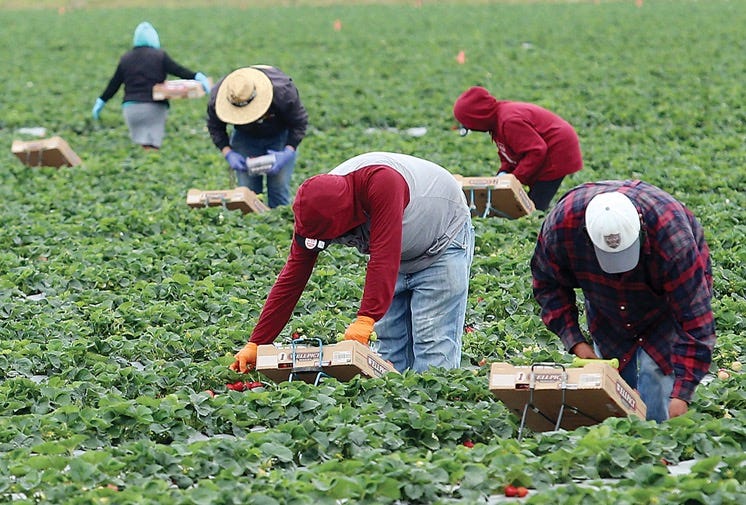
Normal American life isn’t just compatible with fascistic violence. It’s sustained by it. The everyday life of white Americans pre-Reconstruction was nourished by the tyrannical rule of chattel slavery. The American food system, under administrations both Democratic and Republican, would crumble if it weren’t sustained by an oppressed class of migrant farmworkers paid less than minimum wage.
Donald Trump didn’t invent ICE raids or unitary executive theories of imperial presidential power. What he’s doing may be unprecedented but it has a long history, too. Trump’s attempts to normalize a new level of authoritarian consolidation and racist violence are like a glitch in the matrix that allow us to see the violence always inherent in the system. If he succeeds, this escalated violence just becomes part of the new normal, everyday American life, just like the violence of slavery or Jim Crow was rendered invisible to its white American beneficiaries.
We should note here that this is true whether or not Trump’s partisans retain control of Congress and the Oval Office. Because while Democrats talk a tough game about Republican executive overreach, they’re reticent to give up those expansive powers once they’re the ones in power. Rule by decree and regular domestic troop deployments could be wielded by a waning neoliberal Democratic Party as easily as they are by Republicans.
Unless…
Unless we fight. Unless we refuse to allow a new equilibrium of racial violence to get coded as the cost of American existence. Unless we struggle, as our comrades are doing from Los Angeles to New York, from Tucson to Elgin, IL. Mass resistance demonstrates that we have been handed a generational opportunity to combat the entire machinery of American authoritarian violence: the border regime and the military bases, racial capitalism and the prison-industrial complex. As Diane di Prima wrote, these are transitional years and are the dues will be heavy. Heavier perhaps than we can now imagine.
But we have a world to win.