

The secret history of May Day
The most American holiday of them all

International Workers Day is an official government holiday in the majority of countries around the world. Countries from Austria to Zimbabwe set aside May 1st to honor the working class. Schools and banks close. Labor unions and left-wing political parties take the streets. Except, that is, in the United States.
“May 1st is the only truly universal day of all humanity, the only day when all histories and all geographies, all languages and all religions and cultures of the world coincide,” wrote Eduardo Galeano. “But in the United States, May 1st is a day like any other.”
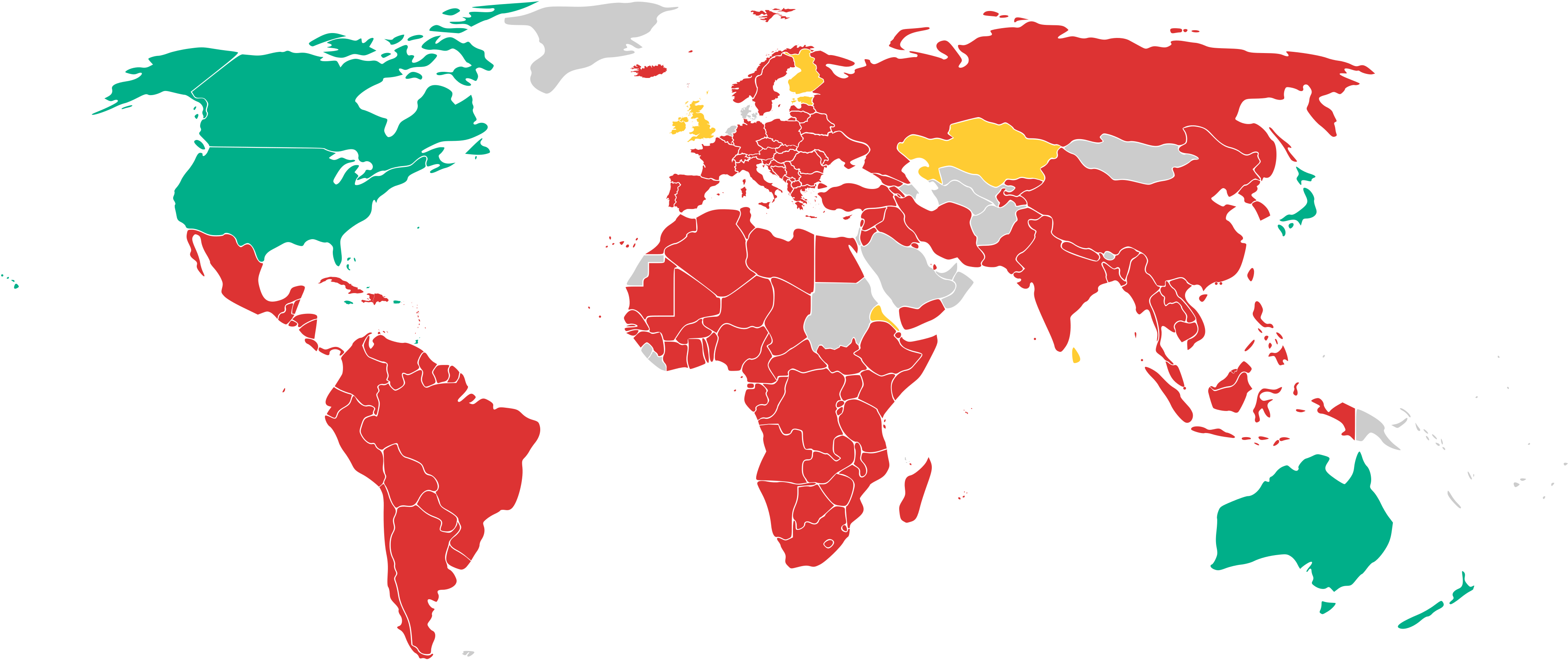
This might make you think that International Workers Day commemorates some faraway occurrence in working class history. A European strike wave, a Latin American uprising, or a pitched battle of the Russian Revolution, perhaps.
You would be mistaken. May Day, a holiday celebrated almost everywhere except the United States, originates from the same place as pickle-topped hot dogs and the current Pope. It ought to be a holiday as American as apple pie. Were it not for the persecution of immigrant anarchist labor organizers by the state of Illinois, International Workers Day would not exist at all.
The Haymarket Affair
The Chicago of 1886 was a booming industrial powerhouse, swelling in size and population as Central and Eastern European immigrants grew to compose a numerical majority of the city’s population. They worked grueling, dangerous jobs in manufacturing, meat-packing, and the railroad industry, living impoverished and degraded lives later immortalized in Upton Sinclair’s novel The Jungle. The Gilded Age ruling class viewed these workers and their families as disposable. It would be another half-century before they would be able to legally organize labor unions for better conditions.
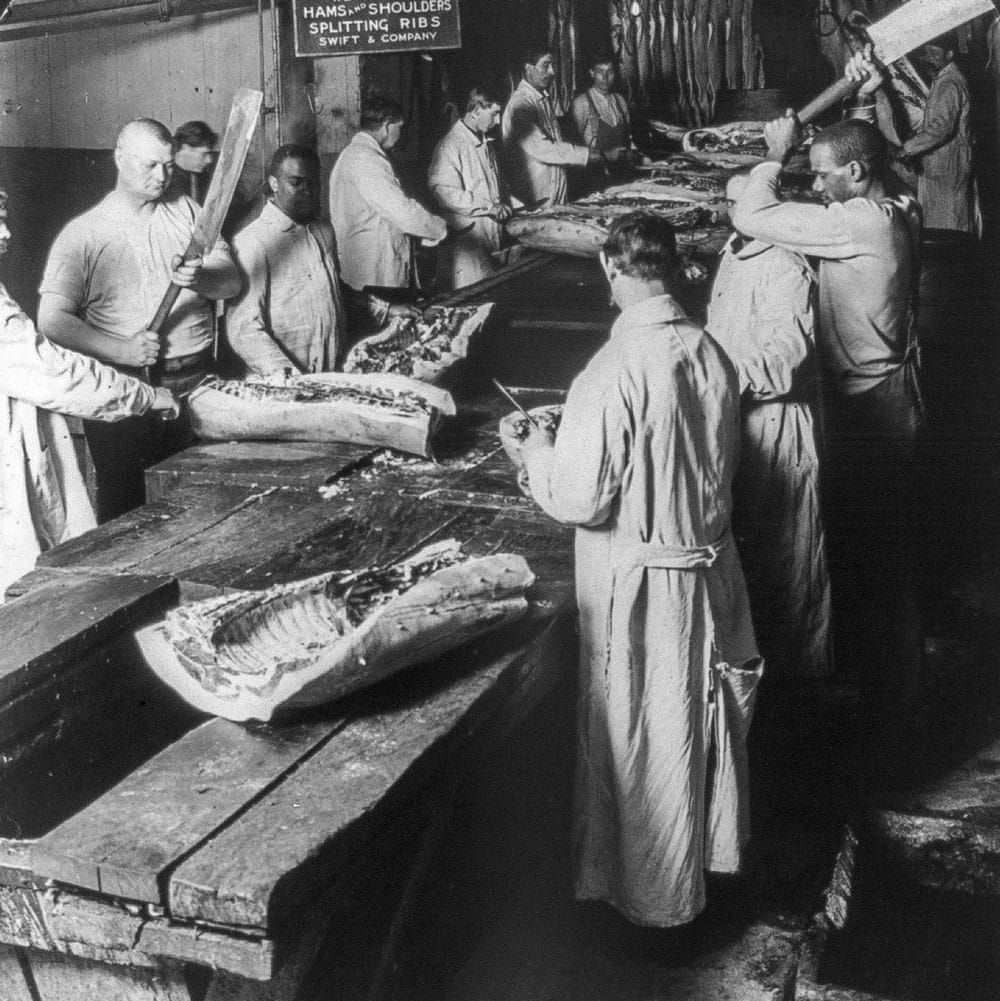
But in 1886, impelled by the brutality of their work conditions, workers organized regardless. The largely immigrant workingmen at Chicago’s McCormick Harvesting Machine Company went on strike as part of a national campaign around what was then a radical demand: a work day of just 8 hours.
Chicago police responded with unchecked violence against the largely German-speaking workers. They fired directly into a crowd of unarmed strikers amassed outside the factory gates, causing multiple fatalities.
In reaction to this horrifying act of lethal police brutality, anarchist labor organizers quickly called for an emergency rally the following day at Haymarket Square. Thousands rallied to listen to speakers including Methodist pastor Sam Fielden. But as Fielden concluded his remarks, police began marching towards the assembled workers, commanding the protesters to disperse. Despite Fielden’s protestations that the gathering was peaceful, the police continued to march forward on the crowd.
It was then that a bomb exploded. In the ensuing chaos, police opened fire wildly on the crowd. There were seven police deaths and as many as 50 protester casualties.
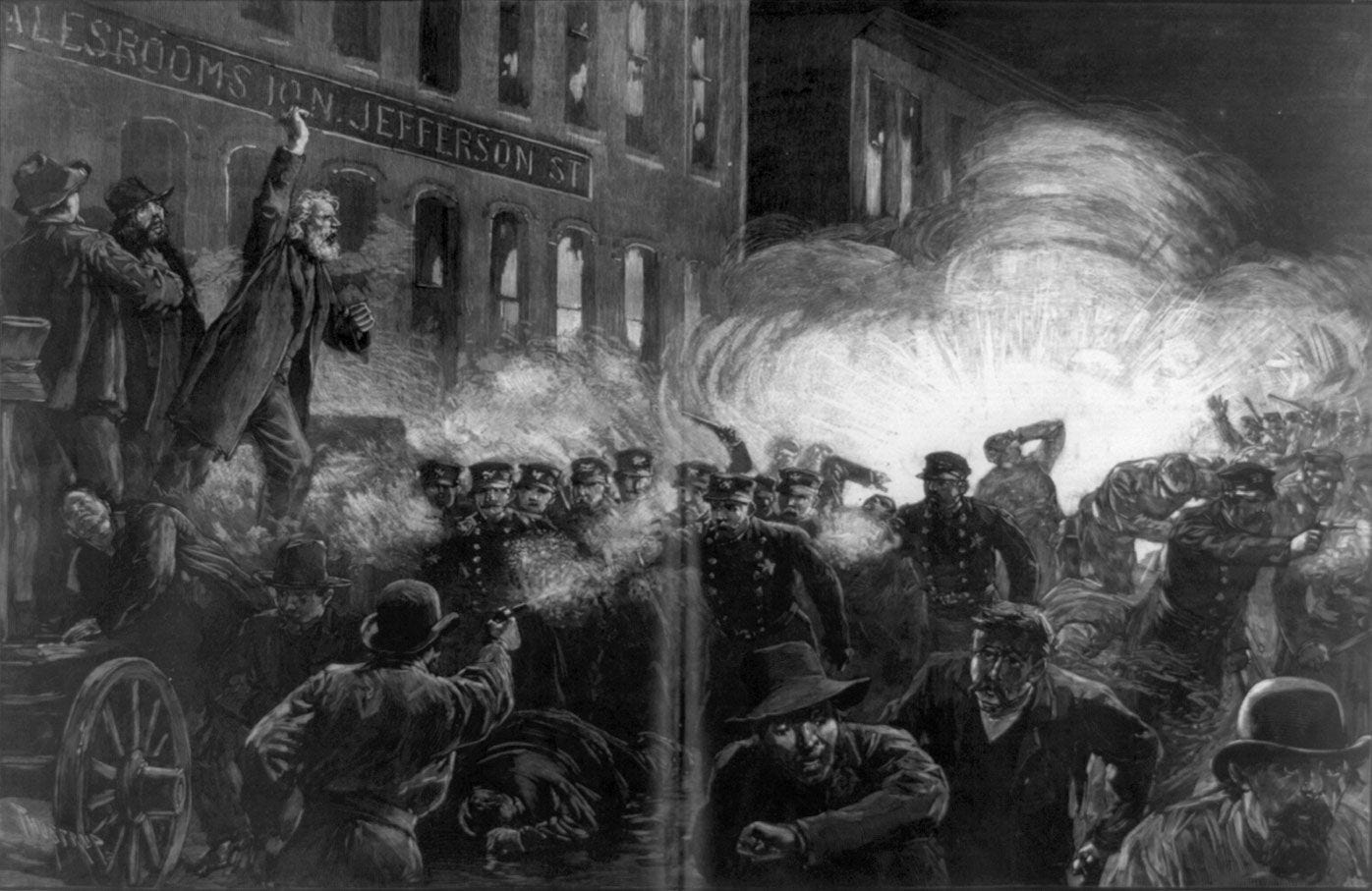
In the aftermath, newspapers breathlessly reported that criminal anarchists had convened the assembly to stage a riot and attack the police. The ensuing surge of anti-immigrant and anti-anarchist hysteria dealt a huge blow to the nascent American labor movement, with dozens of German-speaking labor leaders rounded up in Chicago alone.
The aftermath
The state never identified who threw the bomb at police lines, with union supporters suspecting the involvement of a Pinkerton detective agent provocateur. That didn’t stop the government from sentencing seven men to die: Albert Parsons, Louis Lingg, August Spies, Adolph Fischer, George Engel, and Pastor Sam Fielden. Oscar Neebe was sentenced to life in prison. Witnesses testified in trial that none of the accused were the bomb-thrower. But all were anarchist labor organizers. And all but one were immigrants.
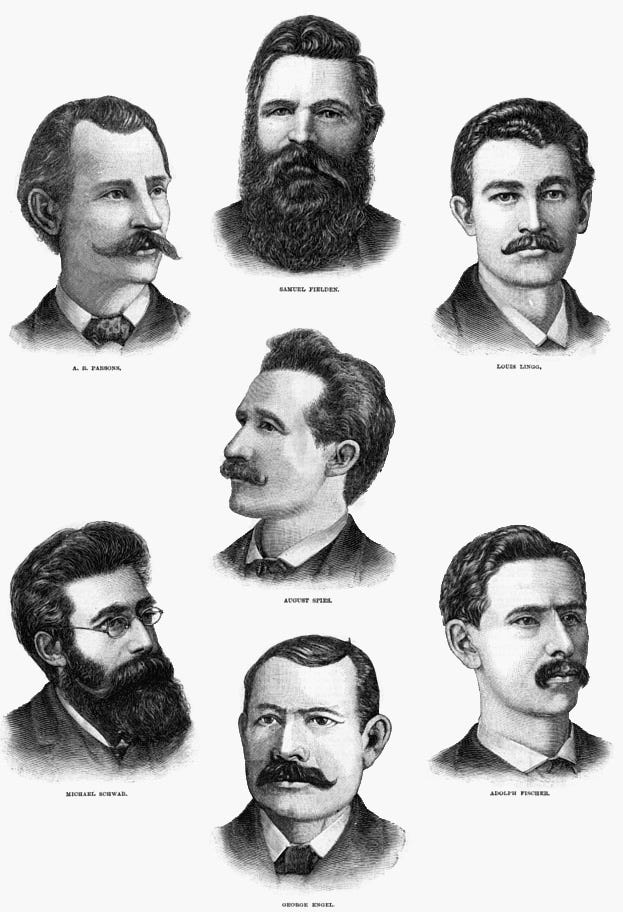
In court, the government held up the defendants’ political writings as evidence of their murderous intent in place of actual evidence of a deadly criminal conspiracy. Four were hanged by the state just a year and a half after the Haymarket rally, with a fifth committing suicide in his cell the night before. They are known today as the Haymarket Martyrs. Following international public outcry, the governor of Illinois pardoned the remaining defendants in 1893.
In 1904, the Second International Workingmen’s Association proclaimed May 1st as International Workers Day, establishing the modern holiday of May Day. The commemoration of the Haymarket Martyrs would galvanize the international workers movement to the present day, though state socialist regimes like the USSR glossed over the anarchist beliefs of those persecuted.
May Day today
May Day remains “a day like any other” for most Americans because President Grover Cleveland established September’s Labor Day as a kind of alternative anti-May Day, afraid that celebrations on May 1st would draw unwelcome attention to the persecution conducted by the U.S. government. The events in Chicago that sparked a global holiday don’t even get a mention in U.S. history textbooks. But International Workers Day remains acutely relevant to those of us living in the imperial core.
Then as now, the U.S. food system is upheld by the brutalization of immigrant workers in industries like meatpacking. Though labor unions are now legal, leftist political resistance once again faces escalating political repression from the federal government on down. Then, the government stoked panic about anarchism. Today, it wages war on Antifa.
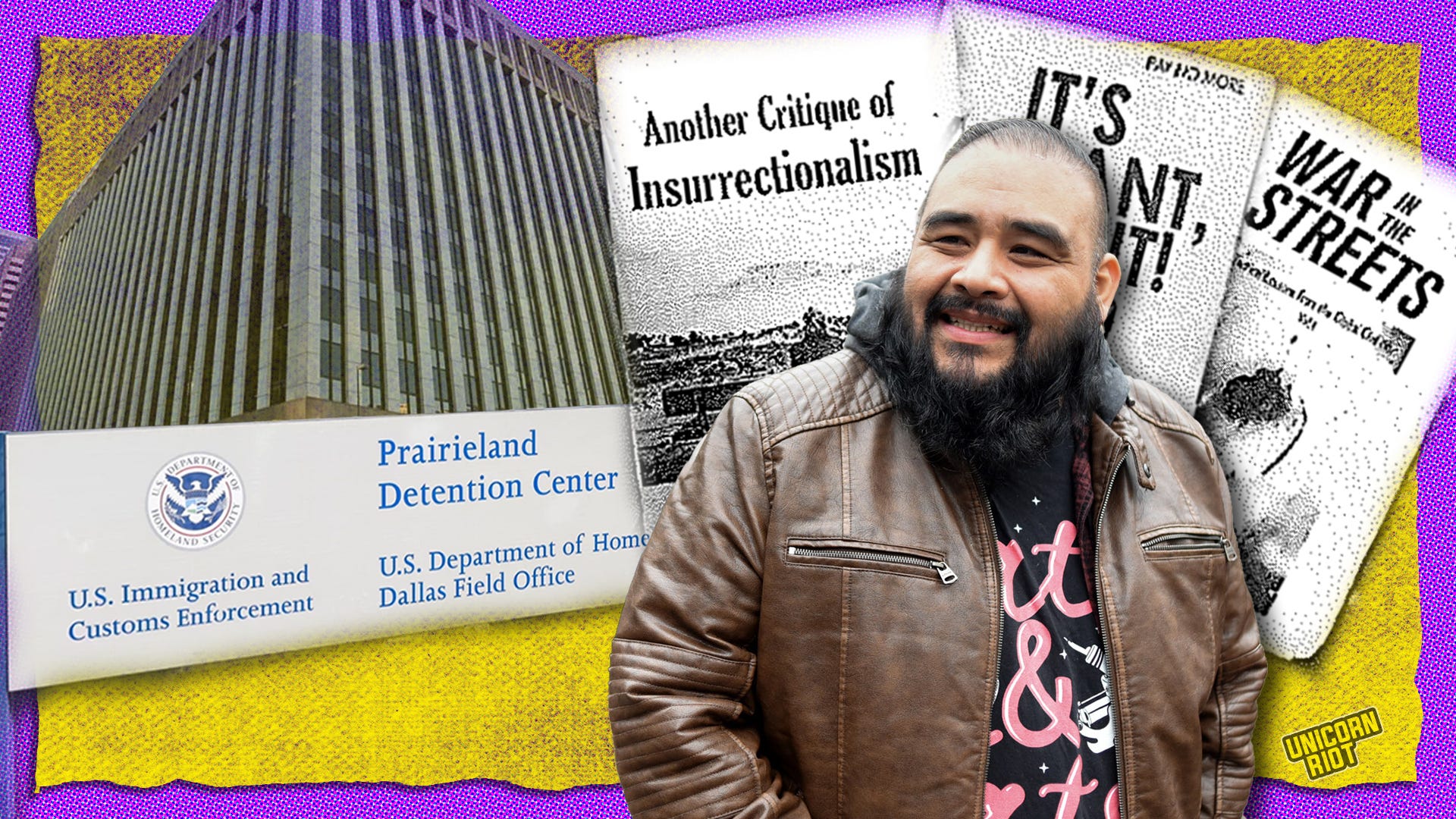
An alleged anarchist’s bomb provided the pretext for state-sanctioned murder in 1886. In 2026, an alleged anarchist’s gunshot at an ICE detention center protest provides the pretext for the state to impose effective life sentences on leftist protesters known as the Prairieland defendants. One of those awaiting sentencing, Des Revol, is an immigrant organizer just like the Haymarket Martyrs. A legal permanent resident, he has been told to nonetheless expect deportation to Mexico after he spends up to four decades in federal prison. His so-called crime? Moving a box of zines from his parents’ house after the protest, which he didn’t even attend.
You can learn more about the Prairieland defendants in my pieces for Unicorn Riot, Truthout, and The Progressive, and you can donate to the defendants on their support site. May Day is a reminder that the United States has long been the site of militant resistance in the face of overwhelming oppression, particularly for migrants and the working class.
It is also a reminder that we can win. We now have an eight-hour workday thanks to the struggles of millions like the Haymarket Martyrs. Their demand, which seemed so wild in the late nineteenth century, is today a fact of everyday life. The government tried to slander and stoke hatred against the people they killed in revenge for the Haymarket Affair. Instead, their struggle is celebrated today by people around the world.
As he ascended the gallows, Haymarket Martyr August Spies cried out, “The day will come when our silence will be more powerful than the voices you strangle today.” His words would prove prophetic. Today, we honor the memory of all of those taken from us, through incarceration or death, in the ongoing struggle for the liberation of working and oppressed peoples.